








Satellite IoT Connectivity: The future of remote environmental monitoring
Environmental data has to travel farther than ever
Environmental monitoring underpins many of today’s most important decisions. From tracking extreme weather events to protecting fragile ecosystems, organizations rely on accurate, timely data to understand changing conditions and act before risks escalate.
Unfortunately, the locations that matter most for monitoring are often the hardest to reach. Remote weather stations, rural watersheds, and coastal ecosystems frequently sit beyond the limits of cellular networks or existing infrastructure. Even in populated regions, terrestrial networks can fail during severe weather incidents or local outages, when access to reliable meteorological data is most critical.
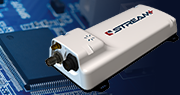
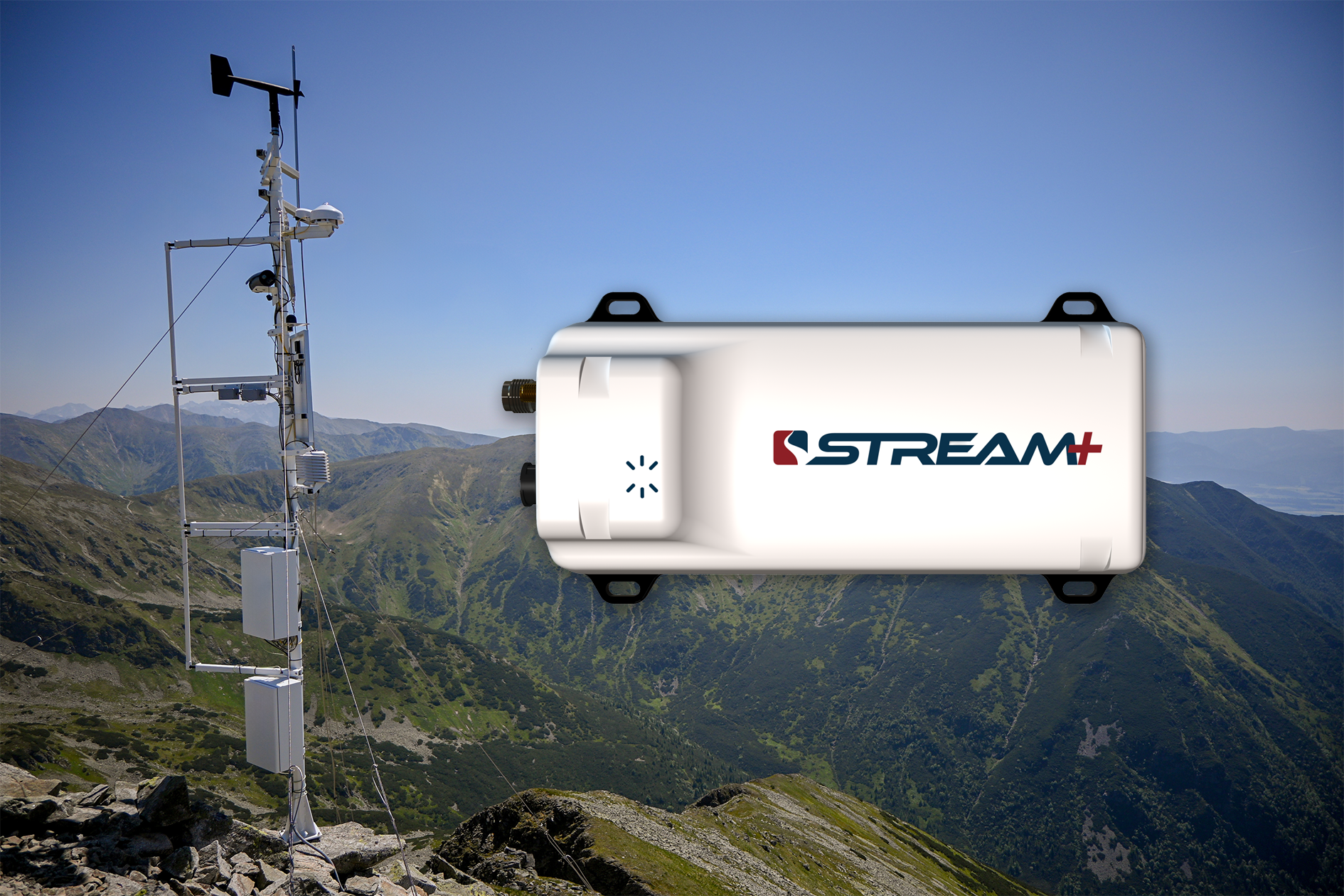
The introduction of satellite connectivity into field-deployed systems is reshaping what remote environmental monitoring can achieve. Modern satellite-enabled devices, such as MetOcean Telematics®’ STREAM+, are helping organizations extend near real-time environmental visibility into places where it was previously impractical. The STREAM+, with Iridium’s global coverage and resilient transmissions, can enable monitoring systems to operate anywhere on Earth, securely and without interruption.
Remote weather monitoring for off-grid utilities and agriculture
The challenge
Utilities and operators rely on weather data to manage risk, protect infrastructure, inform public safety power shutoffs (PSPS) and ensure consistent operations. The most critical weather stations are often those placed in remote or high-risk areas, along rural corridors, in wild-fire prone regions, or in challenging terrain.
In addition to being hard-to-reach, these locations are frequently beyond cellular coverage. Even when cellular coverage exists, it is unreliable at best. Without consistent connectivity, weather stations can fail to deliver critical data, limiting the ability to respond to quickly evolving conditions.
Why satellite connectivity matters
Satellite connectivity enables off-grid weather monitoring by allowing remote stations to transmit real-time meteorological and natural disaster data regardless of their location. Iridium® satellite communications are truly global and independent of terrestrial networks, ensuring data continues to flow even in areas with no cellular coverage or during local disruptions.
With satellite-enabled weather monitoring:
- Meteorological data can be transmitted in near real time from remote locations
- Users have continuous situational awareness during high-risk events, including planned outages or weather-induced network failures.
- Satellite systems can be monitored, configured, and maintained remotely
Modern satellite IoT solutions, like STREAM+, integrate with meteorological dataloggers to support larger data transfers, allowing monitoring stations to evolve beyond simple reporting and produce more advanced datasets.
Water quality monitoring from remote and critical ecosystems
the challenge
Water quality monitoring is increasingly moving towards sensor-based systems that measure parameters such as pH, dissolved O2, turbidity, conductivity, and temperature. These continuous systems provide greater insight than traditional manual sampling, helping to detect changes in quality early and enabling proactive responses.
Many water bodies of interest, such as remote watersheds, rural effluent outfalls and construction and mining sites, are out of range of reliable cellular coverage. Without connectivity, even the most advanced sensors cannot deliver timely insights.
Why satellite connectivity matters
Satellite connectivity bridges the gap by enabling consistent data transmission from even the most isolated locations. Instead of relying on manual site visits, organizations can receive near real-time data streams directly into cloud-based monitoring platforms.
Integrating satellite modems, such as STREAM+, with environmental dataloggers enables:
- Early detection of water quality changes
- Automated alerting when parameter thresholds are exceeded
- Better regulatory compliance and environmental protection
- Reduced reliance on costly and time-consuming field visits
IoT connectivity also supports two-way communication, allowing monitoring systems to be reconfigured or updated remotely as needs evolve.
Resilient connectivity for municipal decision-making
the challenge
Municipalities depend on timely environmental and operational data to protect public safety and maintain essential services. Weather conditions, flooding, air quality and infrastructure status all influence decisions related to emergency response and public communication.
While many municipal systems rely on local cellular and Wi-Fi connectivity, these networks are often the first to fail during severe weather events. Power outages, network congestion, or physical damage to local infrastructure can quickly limit data availability at the very moment municipalities need clear, reliable information to guide critical decisions.
Why satellite connectivity matters
Satellite communications provide a resilient alternative, or serve as a fail-safe backup, to terrestrial networks. Operating independently of on-site terrestrial infrastructure, Iridium L-band satellite connectivity has the unique ability to remain intact during significant weather events, cutting through storms, fires, or other challenging conditions that can cripple cellular or Wi-Fi networks.
This layer of redundancy enables municipalities to:
- Act quickly on risks to public safety and infrastructure
- Maintain situational awareness during extreme weather events
- Support continuity of essential services when terrestrial networks are restricted or disabled
In any case, satellite modems such as STREAM+, can be used as either the primary communication method or as a backup to cellular and Wi-Fi networks, strengthening municipal decision making and response.
Modern satellite connectivity for environmental monitoring
As environmental challenges grow, the need for reliable data increases exponentially. Unfortunately, many of the most critical environments remain beyond the reach of traditional networks.
Satellite connectivity removes these limitations. By enabling continuous, resilient data transfer from anywhere on Earth, STREAM+ allows remote environmental monitoring programs to move beyond infrastructure constraints and focus on what truly matters: understanding conditions, managing risk and protecting ecosystems and communities alike.
MetOcean’s STREAM+ offers:
- Global coverage, including polar and remote regions
- Two-way, IP-based communications
- Support for larger data transfers and file-based workflows
- Optimized power consumption for battery powered systems
Whether tracking water quality far off the grid, monitoring weather in remote regions or ensuring situational environmental oversight, integration of STREAM+’s satellite connectivity with meteorological dataloggers is no longer a niche solution, it is a foundational technology for reliable, environmental monitoring.
